Articles · Practice · 18 June 2026 · 2 min read
Building in Yogyakarta: what a Korean architect had to unlearn
Twenty years of practice in Korea did not prepare me for a site meeting that begins with rain, ends with rain, and involves no drawings at all.
When I moved to Yogyakarta in July 2022, I assumed the difficult part would be the language. It was not. The difficult part was that every assumption I had built over twenty years of practice in Korea came attached to a system — a supply chain, a set of standard details, a shared understanding of what "finished" means — and that system does not travel.
Drawings are a conversation, not an instruction
In Korea I could issue a detail and expect it to be built as drawn. Here, a drawing is the beginning of a discussion with the tukang who will actually build it. That was frustrating for about six months. Then it became the most useful part of the process.
The craftsmen in Yogyakarta know things about local material behaviour that are not written down anywhere. Teak that has not cured properly will move. Local cement sets differently in the wet season. If you issue a detail and walk away, you get a detail that fails in eighteen months. If you sit down and draw it again together, you get something better than what you specified.
Rain is a programme, not a weather condition
In Seoul, rain is a schedule risk. In Yogyakarta, rain is the thing the building is for. Every overhang, every threshold, every drainage line has to work for a downpour that arrives in four minutes and drops more water than a Korean typhoon.
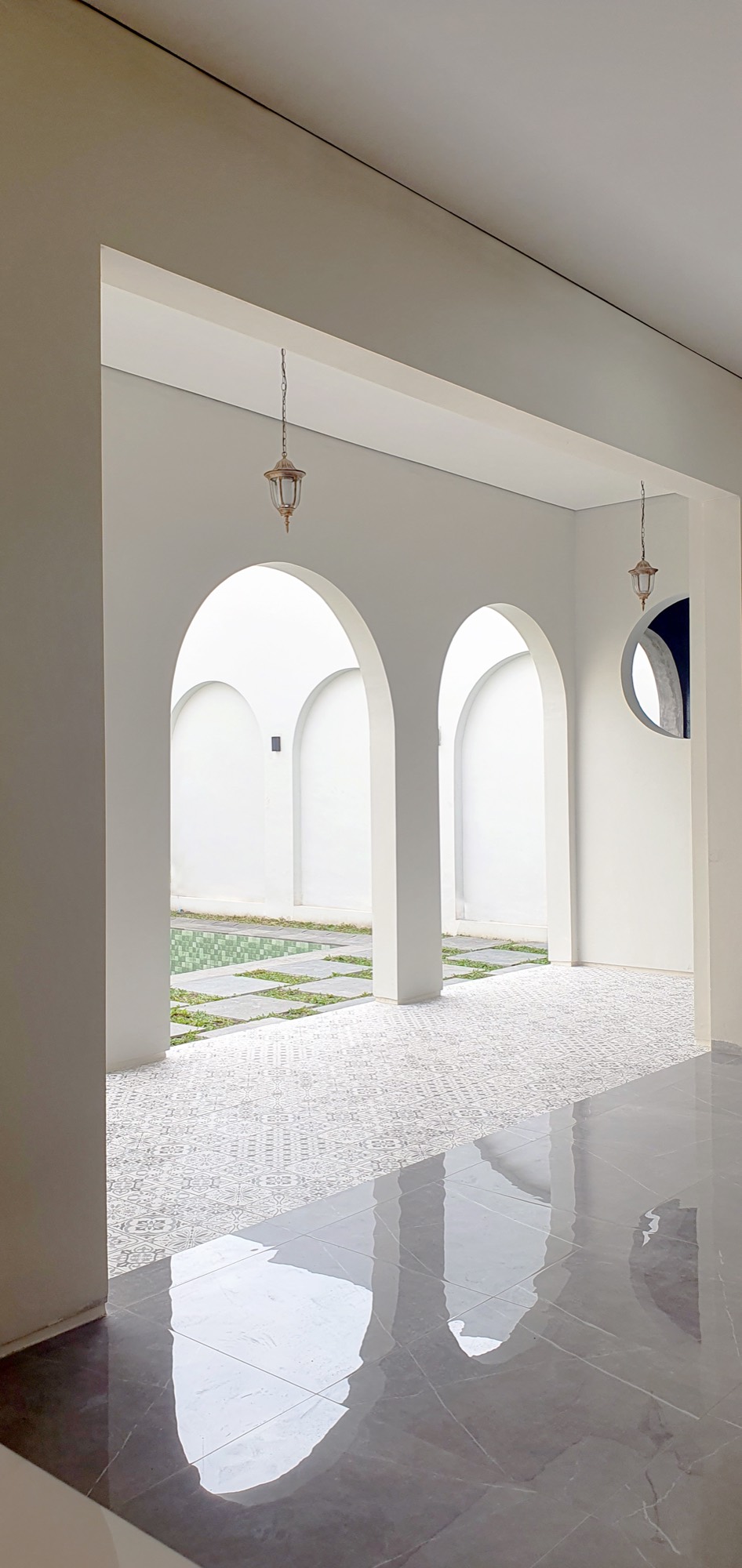
This changed how I plan. The covered outdoor room — a veranda, a deep porch, a roofed path between two volumes — stopped being a nice addition and became the primary space. In both villas we have completed here, the veranda is the room the family actually lives in.
What carried over
Not everything had to be unlearned. Korean practice is rigorous about the sequence of arrival: where you take off your shoes, where the ground changes, where you are permitted to see into the house and where you are not. That thinking works perfectly well in a tropical house. It just needs a roof over it.
I am still learning. But the houses are better for the fact that I stopped assuming I already knew.